
Wide Open Cycling on the Prairie Spirit Trail
Ottawa, Kansas
Prairie Spirit Trail
Distance: 50 miles
Ride With GPS Map (South to North)
The Prairie Spirit Trail stretches 50 miles through the quiet heart of eastern Kansas, running between Ottawa and Iola along the route of a long-retired railroad. It’s a wide-open ride through open skies and distant tree lines, the real essence of the plains.
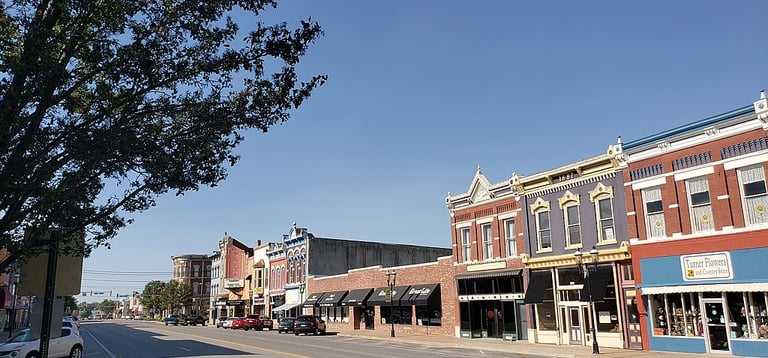
The northern trailhead begins in Ottawa, a town with brick storefronts and a small but lively main street. Within a few minutes of pedaling, the noise of town fades, and the landscape opens into a wide plain edged by farms and hedgerows. The trail surface here is smooth and fast, alternating between paved and packed limestone as it stretches south. The gentle grade and easy flow make this section inviting for riders of all levels, and on cool mornings, mist often hangs above the fields like a veil before the sun burns it away.
Cruising through small towns
The route passes through the town of Princeton before reaching the midpoint at Garnett. The old Santa Fe depot here has been restored, and its shaded benches, water fountain, and restrooms make for a nice break before continuing on. Garnett has a few cafes and small-town restaurants that cater to trail riders.
South of Garnett, the trail slips into some of its most scenic miles. The landscape becomes more varied, with low rolling terrain, wooded hollows, and the occasional creek crossing. Towns such as Colony and Carlyle appear with little more than a handful of streets, a few homes, and sometimes a trail shelter or picnic area. Between them, the path winds through stretches of breezy prairie.
By the time the trail reaches Iola, the countryside flattens again. The route ends near the restored depot downtown, where there are a few restaurants, coffee shops, and a nearby park.
Wide tires, gentle grade
The surface alternates between pavement in the towns and crushed limestone through the countryside. It’s firm and easy to roll on when dry but can soften after a heavy rain. A bike with wider tires handles it best, though the grade remains gentle throughout, never requiring much effort to maintain speed. The few highway crossings are well marked, with long rural sections in between.
The biggest challenges come not from the terrain but from the weather. In midsummer, the Kansas sun can make the open stretches feel very long, and the wind can turn from friend to foe in a matter of minutes. Spring and fall, however, bring ideal conditions with cooler air, quiet mornings, and often a sense that you have the landscape to yourself.


Grab some great KU socks!
Photo © Ian Ballinger — CC BY-SA 4.0 via Wikimedia Commons
Cycling in Kansas rolls on small-town routes.
Prairie Spirit Trail
Distance: 50 miles
Ride With GPS Map (South to North)
The Prairie Spirit Trail stretches 50 miles through the quiet heart of eastern Kansas, running between Ottawa and Iola along the route of a long-retired railroad. It’s a wide-open ride through open skies and distant tree lines, the real essence of the plains.
The northern trailhead begins in Ottawa, a town with brick storefronts and a small but lively main street. Within a few minutes of pedaling, the noise of town fades, and the landscape opens into a wide plain edged by farms and hedgerows. The trail surface here is smooth and fast, alternating between paved and packed limestone as it stretches south. The gentle grade and easy flow make this section inviting for riders of all levels, and on cool mornings, mist often hangs above the fields like a veil before the sun burns it away.
Cruising through small towns
The route passes through the town of Princeton before reaching the midpoint at Garnett. The old Santa Fe depot here has been restored, and its shaded benches, water fountain, and restrooms make for a nice break before continuing on. Garnett has a few cafes and small-town restaurants that cater to trail riders.
South of Garnett, the trail slips into some of its most scenic miles. The landscape becomes more varied, with low rolling terrain, wooded hollows, and the occasional creek crossing. Towns such as Colony and Carlyle appear with little more than a handful of streets, a few homes, and sometimes a trail shelter or picnic area. Between them, the path winds through stretches of breezy prairie.
By the time the trail reaches Iola, the countryside flattens again. The route ends near the restored depot downtown, where there are a few restaurants, coffee shops, and a nearby park.
Wide tires, gentle grade
The surface alternates between pavement in the towns and crushed limestone through the countryside. It’s firm and easy to roll on when dry but can soften after a heavy rain. A bike with wider tires handles it best, though the grade remains gentle throughout, never requiring much effort to maintain speed. The few highway crossings are well marked, with long rural sections in between.
The biggest challenges come not from the terrain but from the weather. In midsummer, the Kansas sun can make the open stretches feel very long, and the wind can turn from friend to foe in a matter of minutes. Spring and fall, however, bring ideal conditions with cooler air, quiet mornings, and often a sense that you have the landscape to yourself.
Grab some great KU socks!
Photo © Ian Ballinger — CC BY-SA 4.0 via Wikimedia Commons
Cycling in Kansas rolls on small-town routes.
Some pages contain affiliate links. If you purchase something through one of these links, we may earn a small commission.